Waldorf, Maryland
Appliance Diagnostics in Waldorf, MD
Appliance Diagnostics in Waldorf, Maryland, with the published national price range up front, the failed part confirmed by testing on site, and the repair price stated before any work begins.
Waldorf, Maryland
Appliance Diagnostics in Waldorf, Maryland, with the published national price range up front, the failed part confirmed by testing on site, and the repair price stated before any work begins.
Appliances rarely fail honestly. A refrigerator that runs all day and still loses ground is telling you something is wrong, but it is not telling you what. A washer that stops with a drum full of wet laundry could have a dead pump, a failed door switch, or a bad control board. Guessing between those answers gets expensive fast, because a wrong part costs the same as the right one. Our diagnostic work closes that gap: we test with meters, read stored codes, and confirm the failure before anything gets replaced.
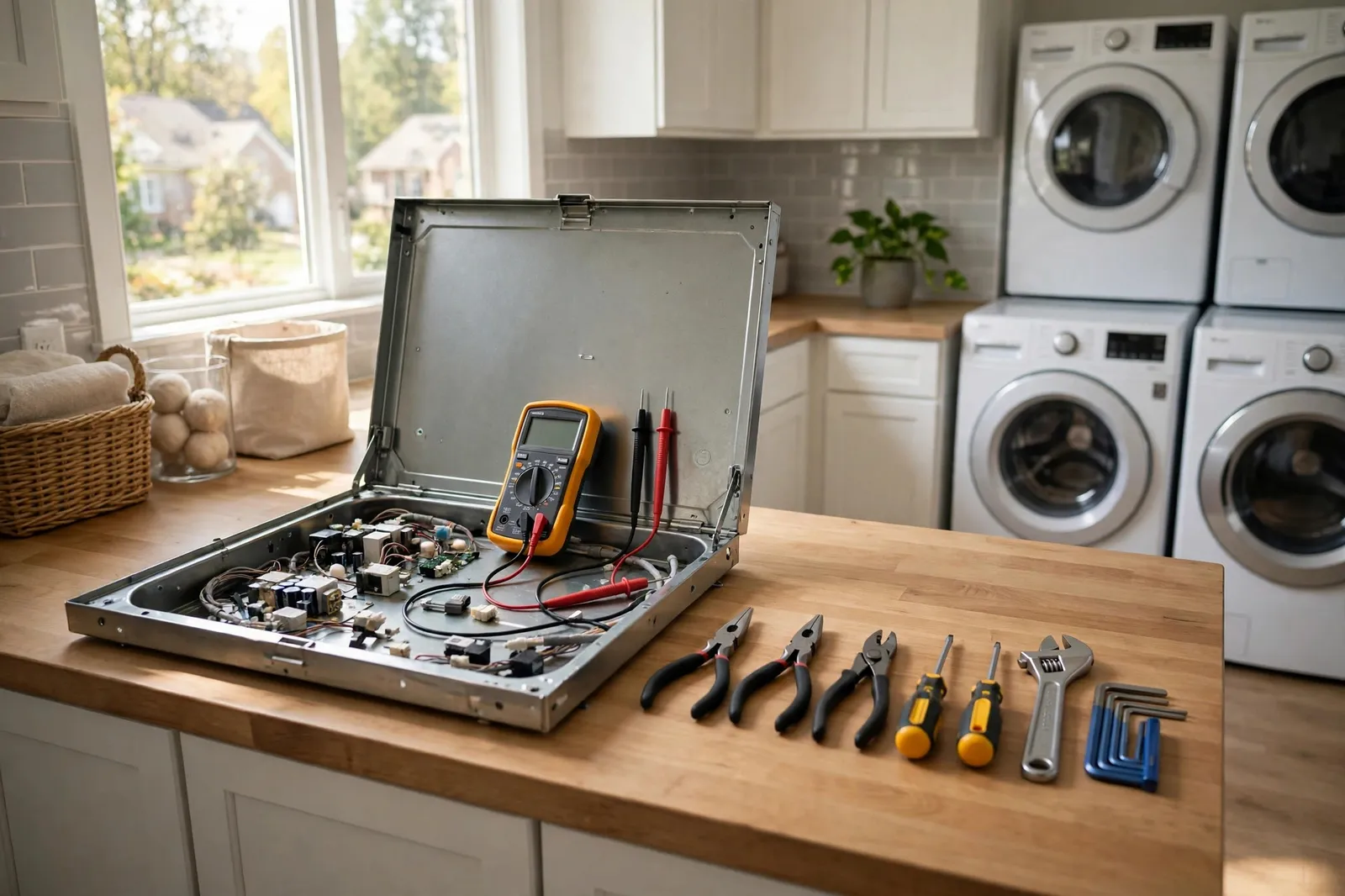
A diagnostic visit starts with what the machine does and does not do, in your words. Then we run it. A refrigerator gets temperature readings in both compartments and an airflow check. A washer gets run through fill, wash, drain, and spin. Components get tested for continuity and draw, because a heating element that looks fine can test open, and a humming motor can pull twice the current it should.
Error codes matter, but they are a starting point rather than a verdict. A code tells us which check the machine failed, not whether the sensor reporting it is itself the failure. We confirm with instruments before calling any part bad, and test the parts around it. Some failures only show at working temperature and load: a thermal fuse that tests fine cold and opens hot, a defrost system that behaves for two days and fails on the third. Testing under real conditions separates a diagnosis from a hunch.
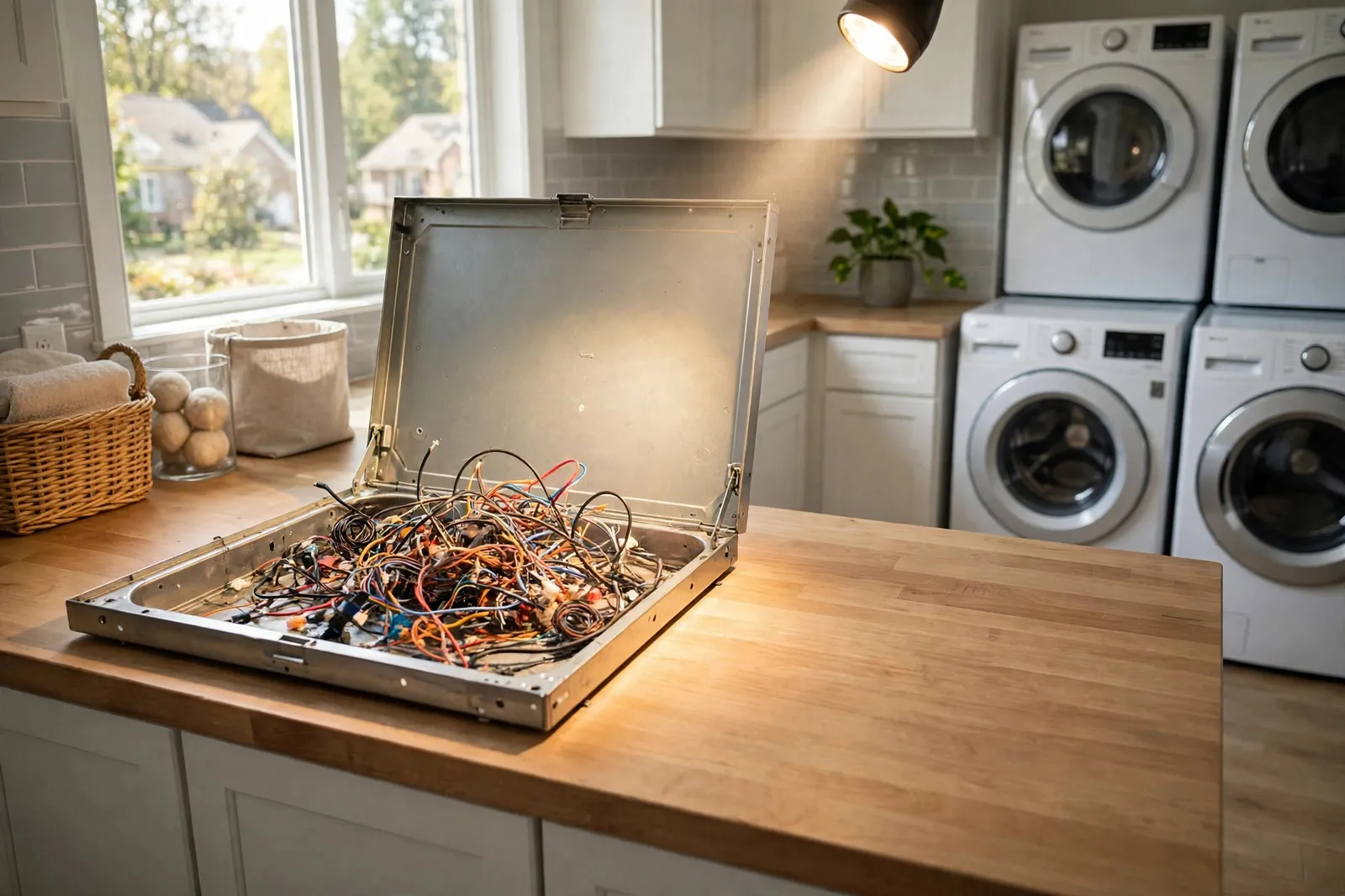
A Wakefield homeowner's refrigerator ran around the clock and started freezing lettuce in the crisper drawers while the freezer side stayed cold. Testing showed the compressor and fans were sound, but power was not reaching the evaporator fan on its cycle. Tracing the circuit found the fan's connector had worked itself loose and heat-cycled into a poor connection. We reseated and secured the connector, confirmed steady airflow into the fresh food side, and watched the temperatures settle back to their settings.
No Waldorf shop publishes a local price list, so we use published national figures and label them as national. Angi's 2026 data puts the average appliance repair at about $170, with a typical range of $100 to $240. Housecall Pro's 2026 figures agree, with most jobs between $107 and $249 and an average near $178. Labor nationally runs $50 to $150 per hour: careful testing costs less than a part replaced on a guess, then replaced again when the real failure shows. A job like the Wakefield one, where testing ends in a small fix, lands at the low end of those ranges. When tests point to a major component, you hear the finding first and decide whether the machine earns the bigger repair.
Parts swapping is the expensive way to fix an appliance. Every wrong part means a second visit and a homeowner who paid for a guess. Sometimes the tests bring news nobody wants: a sealed system losing pressure on a refrigerator deep into its second decade, or a control board failure on a washer whose bearings are already rumbling. In those cases we say so plainly, before your money moves. A machine at the end of its economical life does not become a better machine because someone sold you a repair.
Use the quote form at the bottom of this page. Tell us the appliance, the brand, and what it is doing or failing to do, plus the model number from the label inside the door or on the back panel. Note any error code the display shows.
We run the appliance through its work, testing the components that could explain the symptom with meters and temperature readings. You get the finding in plain terms: what failed, what it affects, and what the repair involves.
Yes, exactly as it appears, along with what the machine was doing when it showed. Codes point our testing in the right direction. Leave the code in place if you can, rather than unplugging the machine.
Published national figures are the guide, since no local shop posts prices. Angi's 2026 data puts the average repair around $170, most repairs between $100 and $240, and Housecall Pro shows most jobs between $107 and $249.
Often, yes. Loose connections, clogged filters, and fouled sensors can usually be corrected on the spot once testing confirms them, with your go-ahead. A major component we do not have with us takes a further step.
Then we tell you plainly, and explain what the tests showed. A repair makes sense when the machine has real life left. When a costly part fails on an aging machine, replacement is often the smarter spend.
The appliance, the brand, the symptom, and the model number if you can find it. Add sounds, smells, codes, leaks, or a cycle it will not finish.
Tell us which appliance is down and what it is doing. We read every request that comes in and respond with the published national range for that kind of repair and the next step, starting with a visit to test and confirm the failed part on site.
Prefer to talk it through first? Send the form and we will call you back at the number you give us.