Waldorf, Maryland
Ice Maker Repair in Waldorf, MD
Ice Maker Repair in Waldorf, Maryland, with the published national price range up front, the failed part confirmed by testing on site, and the repair price stated before any work begins.
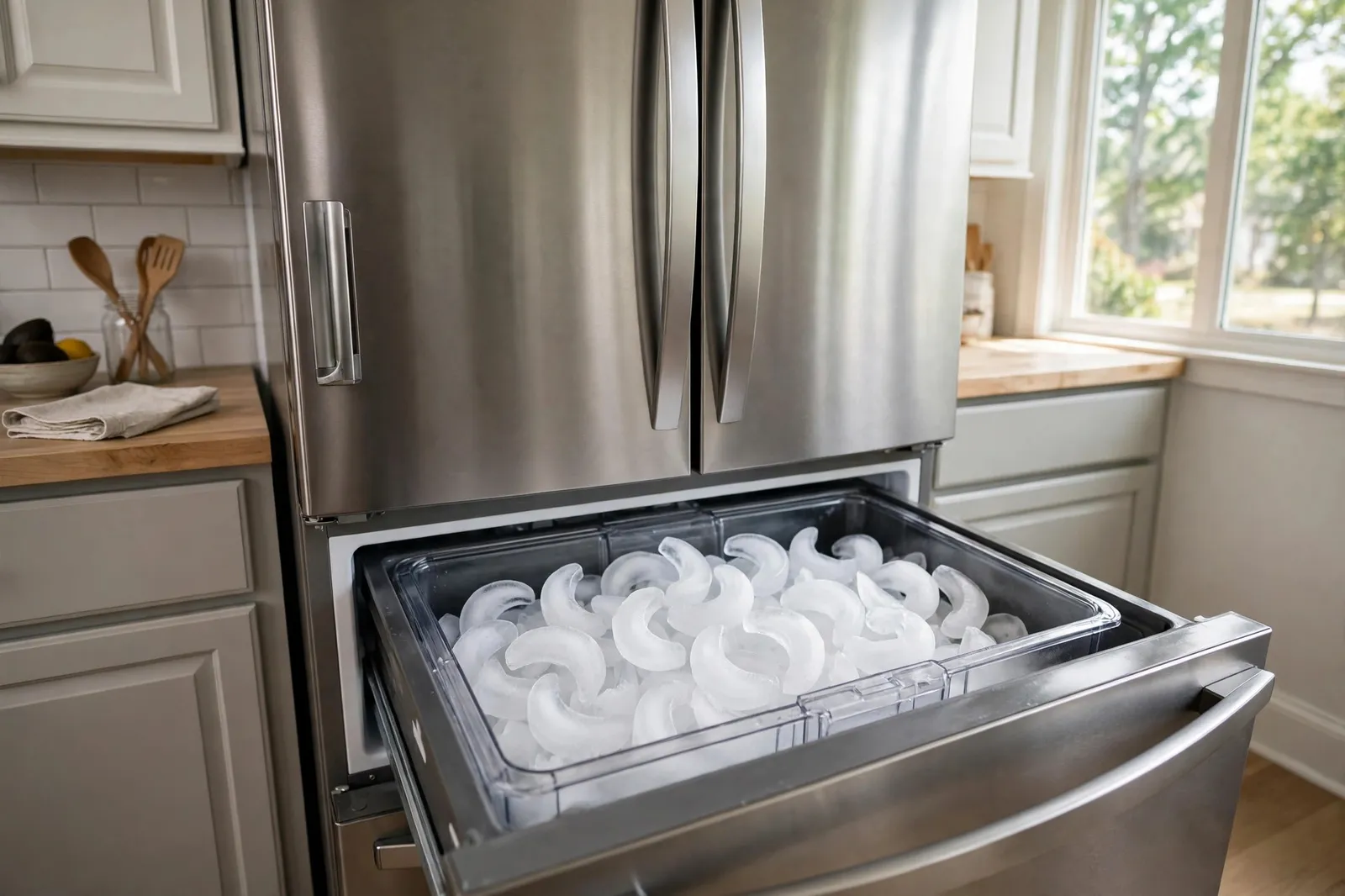
Waldorf, Maryland
Ice Maker Repair in Waldorf, Maryland, with the published national price range up front, the failed part confirmed by testing on site, and the repair price stated before any work begins.
The ice maker tends to fail on the hottest week of the year. You open the freezer, the bin holds three cubes and a puddle of good intentions, and the machine that was supposed to keep up has quietly quit. Waldorf Appliance Repair fixes refrigerator ice makers across Waldorf and Charles County, and every job starts with the quote form on this page.
Hard water is the first suspect here, and it earns the suspicion. The mineral content in Southern Maryland water stiffens inlet valves a little more every year until fill levels drop, cubes come out small and hollow, and eventually the valve stops opening at all. Scale narrows fill tubes the same way.
The ice maker itself has its own failure list: a module motor that no longer cycles, a mold thermostat that misreads temperature and stalls the harvest, a bail arm switch stuck in the off position, and worn gears that click without turning. On some models the problem is not the ice maker at all but a freezer running a few degrees warm, which stretches every cycle until production falls behind a household's summer pace.
Our scope is the ice maker and the components on the appliance side of it: the module, the inlet valve, the fill tube, and the switches and sensors that run the cycle. Piping work beyond the refrigerator's own connection is outside what we do. We service ice makers in refrigerators from Whirlpool, Maytag, Samsung, LG, GE, KitchenAid, and Kenmore.
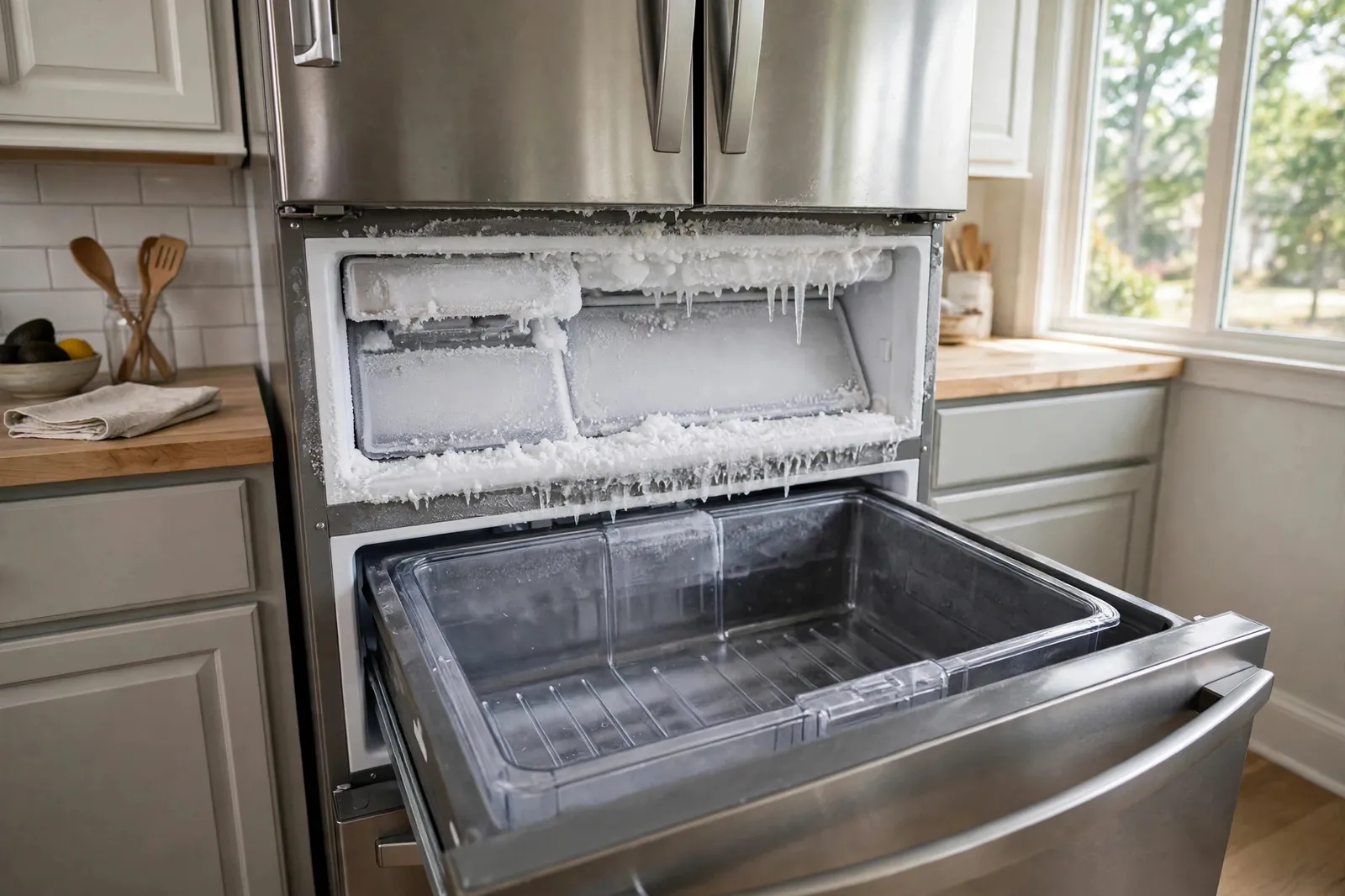
A Sheffield homeowner's French door refrigerator had slowed over a season from full bins to a handful of small, hollow cubes, then stopped making ice entirely. Testing showed the module cycling correctly but the inlet valve barely opening against mineral scale built up over years of hard water. We replaced the valve, flushed the fill line at the appliance connection, and stayed through the first cycle to see normal cubes drop.
These are published national ranges, shared openly because no Waldorf shop publishes a local price list. Per Angi 2026 cost data, most appliance repairs land between $100 and $240 nationally, with an average around $170. Housecall Pro 2026 figures put most appliance repair jobs between $107 and $249, with an average around $178, and national labor figures run $50 to $150 per hour.
Ice maker work usually lands inside that typical band. An inlet valve, a fill tube, or a bail arm switch is a modest part. A full ice maker module costs more, and on dual-ice-maker French door models the in-door unit can run higher still.
Start with the quote form at the bottom of this page: your name, your phone, the refrigerator brand, and what the ice has been doing. On the visit we check freezer temperature first, then test the module cycle, the valve, and the fill in order, and confirm the failed part before replacing it. We close by watching a full cycle produce ice.
Use the quote form at the bottom of this page and tell us what your ice maker is doing. We read every request that comes in and respond with the published range for your kind of repair and the next step.
Published national figures from Angi 2026 put most appliance repairs between $100 and $240, with an average around $170, and Housecall Pro 2026 puts most jobs between $107 and $249, with an average around $178. Valves and switches sit low; a full module replacement sits higher.
Small, hollow cubes mean the ice maker is harvesting before the water fully freezes, or the fill itself has shrunk. A scaling inlet valve that underfills the mold is the most common cause in this area, and a freezer running warm produces the same result by stretching the freeze time.
Clicking without a harvest usually means the module motor is turning against worn gears, or the mold thermostat is not registering that the cubes are ready. Both are testable on a visit, and the fix differs, so we confirm which one before ordering anything.
Yes, and it is the one thing worth checking before anything else. A filter long past its change interval chokes water flow to the ice maker and shrinks production. If a fresh filter does not restore the ice within a day, the cause is inside the appliance and worth a visit.
Ice absorbs odors from the freezer around it, so old food smells end up in the bin. Dump the bin, let the maker refill with fresh ice after a filter change, and if the taste stays, the fill path itself may need attention.
It does. Ice makers cycle on temperature, and a freezer holding several degrees above its setting stretches each cycle until daily production falls behind, then stops the harvest entirely. That is why we measure cabinet temperature first: sometimes the ice maker is the symptom, not the failure.
Tell us which appliance is down and what it is doing. We read every request that comes in and respond with the published national range for that kind of repair and the next step, starting with a visit to test and confirm the failed part on site.
Prefer to talk it through first? Send the form and we will call you back at the number you give us.