Waldorf, Maryland
Washer Repair in Waldorf, MD
Washer Repair in Waldorf, Maryland, with the published national price range up front, the failed part confirmed by testing on site, and the repair price stated before any work begins.
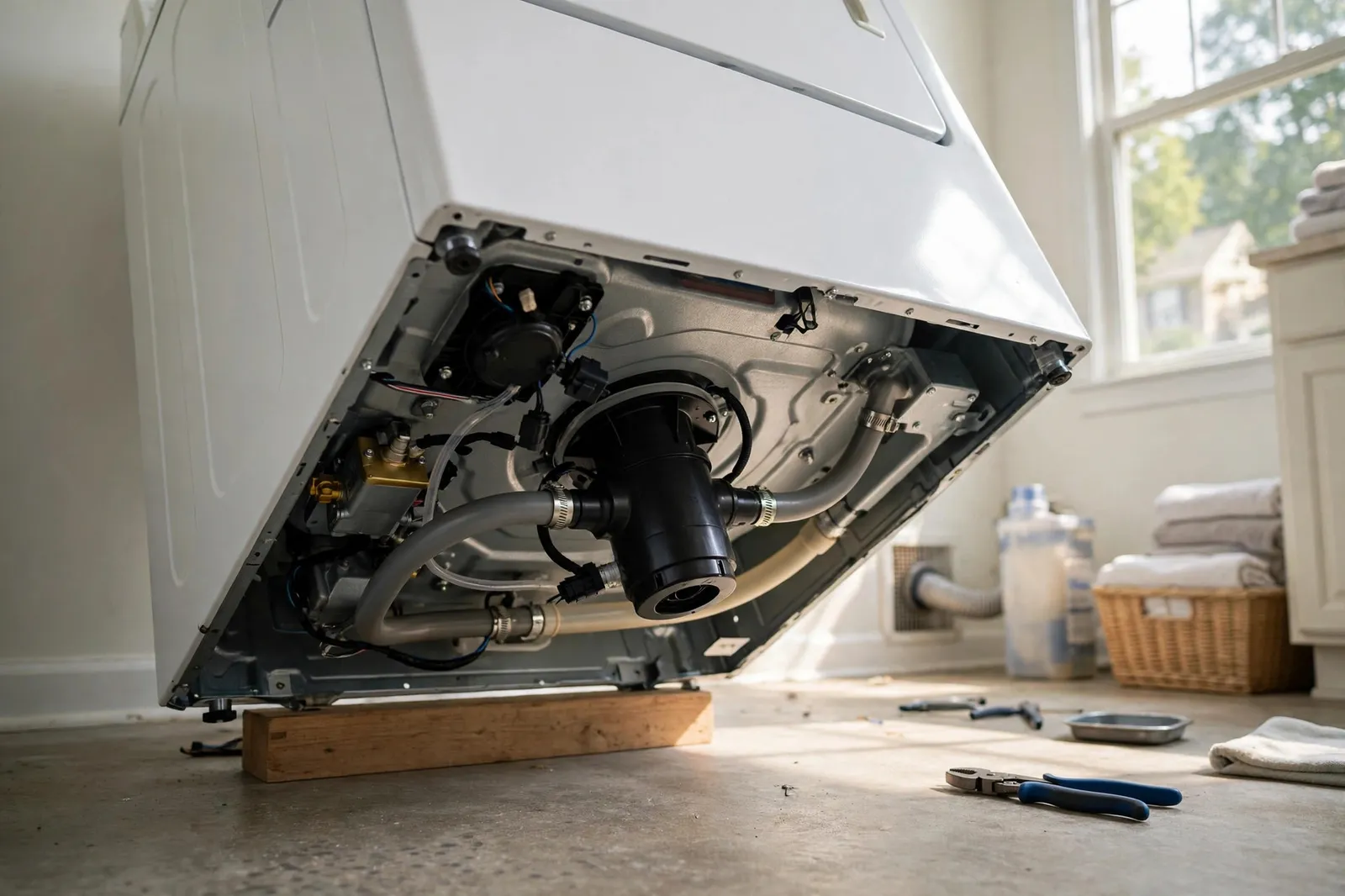
Waldorf, Maryland
Washer Repair in Waldorf, Maryland, with the published national price range up front, the failed part confirmed by testing on site, and the repair price stated before any work begins.
A washer that stops mid-cycle leaves you with a tub of soaking clothes, a door or lid that may not open, and a laundry room problem that will not wait until the weekend. In Waldorf homes we see the same handful of failures behind most of those calls: pumps that cannot move water, controls that quit halfway through a cycle, and valves choked slowly by mineral scale. Waldorf Appliance Repair diagnoses washers by testing the cycle stage where the machine died, because a washer tells you a great deal if you know where it stopped.
Top load and front load machines fail differently, and we work on both. This page covers the washer problems we repair most often across Charles County, a recent job and what it cost, the published national ranges for washer repair, and the quote form at the bottom of the page, which is how every job with us begins.
A washer that will not drain or spin is the most common call in this trade. The drain pump does the hardest work in the machine, and it jams on the coins, hairpins, and collar stays that escape pockets, or its motor simply wears out under the strain. We check the pump and the drain path first, because a machine that cannot empty cannot spin, and a pump jammed on debris is a very different repair from a failed control board sending no signal at all.
Agitation problems point at the drive system. Top load machines that fill and drain but barely move the clothes may have a worn drive coupling, a failing motor, or splines stripped inside the agitator. Front load machines that tumble weakly or not at all raise questions about the motor, its control, and the belt on models that use one. Each failure stops the wash at a recognizable point, and we test against that point rather than opening the machine and guessing.
Leaks deserve a careful look before they deserve a part. Water under a front load machine often traces to the door boot seal, split or mold-damaged at the fold. Water under a top loader more often comes from hoses, the tub seal, or a pump housing. Southern Maryland's hard water stiffens inlet valve screens and slows fill until cycles time out, and we treat the water path as part of any fill complaint.
Noise and movement tell their own story. A washer that bangs in spin may have worn suspension rods or shock absorbers, a loose counterweight, or loads habitually run unbalanced until the hardware gives. Front load machines add the mildew smell that humid summers breed in the door seal folds, and we can tell you whether the seal can be cleaned back or has reached the point of replacement.
We service Whirlpool, Maytag, Samsung, LG, GE, Kenmore, and KitchenAid washing machines, top load and front load, standard and high efficiency models.
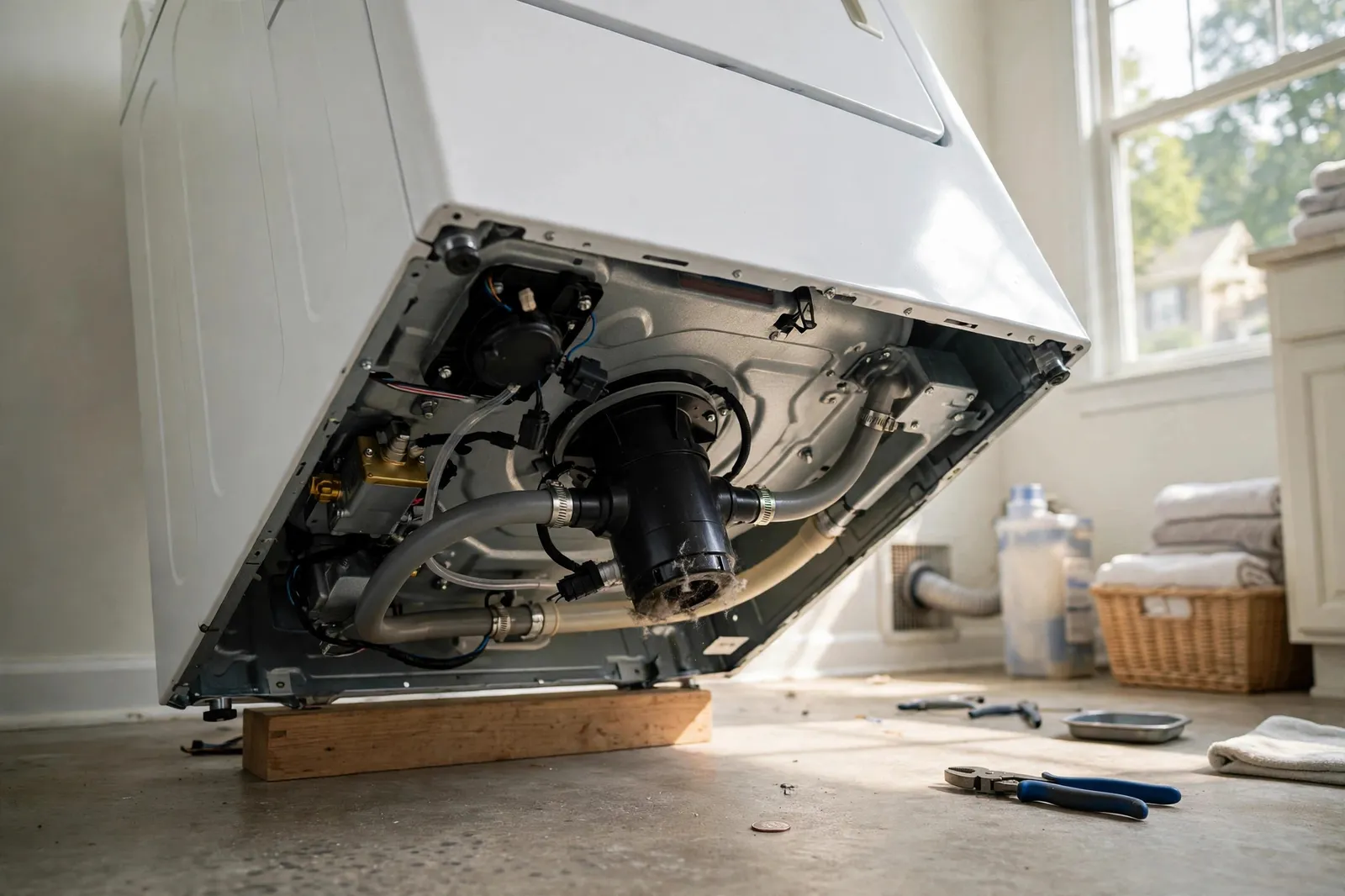
A top load washer in a Carrington home filled and agitated normally, then stopped dead before the spin cycle with a tub full of water, load after load. Drain testing showed the pump running and the hose clear, and electrical testing traced the fault to the main control board, which was no longer sending power to the drain and spin stages. We replaced the control board and ran two full test cycles, including a heavy spin load, before calling it done.
No Waldorf shop publishes a local price list for washer repair, so we publish the national numbers and label them as national. Angi's 2026 cost data puts washing machine repair at $50 to $450, a wide range because this trade's cheapest and priciest jobs both live in the laundry room. Housecall Pro reports most appliance jobs landing between $107 and $249 at an average near $178, and Angi puts the average repair across appliances at about $170, with labor nationally at $50 to $150 per hour for context.
The bottom of the washer range is debris and wear parts: a pump cleared of a coin jam, inlet screens cleaned of scale, a lid switch replaced. The top of the range is electronics and drive work: control boards, motors, and tub bearings. That spread is why we test before we quote a direction, because the same symptom, a tub that will not spin, can sit near either end of it.
Tell us where the cycle stops and we start testing there. Fill, agitate, drain, and spin are separate stages with separate parts, and the stage that fails narrows the suspect list before a single panel comes off. We confirm the failed component electrically, replace it with the part matched to your machine's model, and finish with a full test cycle run through spin, because a washer repair is not done until the machine proves it under a load.
We will also tell you when a washer is not worth repairing. A bearing failure on an older machine, or a control board on a unit with a rusting tub, can cost more than the remaining life of the washer justifies. Straight talk on that question is part of the service, and the decision always stays with you.
Send the quote form at the bottom of this page with the brand and model of your washer if you can find the tag, whether it is top load or front load, and where the cycle stops: filling, washing, draining, or spinning. Add any error code the display shows. That information points the testing in the right direction from the first minute.
Angi's 2026 national data puts washing machine repair at $50 to $450. Housecall Pro reports most appliance jobs between $107 and $249, at an average near $178. Simple fixes like a cleared pump jam or a lid switch sit at the low end of the washer range, while control boards, motors, and bearing work sit at the top. Testing is what tells us where your machine's problem actually lands.
A washer that cannot drain will not spin, because the machine protects itself from flinging a tub full of water. The usual causes are a jammed or failed drain pump, a clogged drain path, or a control problem that never sends the drain stage its signal. We test the pump and hose before suspecting the board, since debris jams are common and boards are not.
Front load door seals fold over on themselves, and those folds hold water after every cycle. In a humid Charles County summer, that trapped moisture grows mildew fast. Wiping the seal dry, leaving the door cracked between loads, and running a cleaning cycle slows it down. A seal that stays black and sour after cleaning has usually absorbed the problem and is better replaced.
Usually, yes. Violent spinning points to worn suspension rods on a top loader or worn shock absorbers on a front loader, sometimes a loosened counterweight. Running heavy, unbalanced loads accelerates the wear. We test the suspension under a spin load, because a machine can sit perfectly still while empty and still have hardware that has given up.
It depends on the machine around the board. A sound tub, a healthy motor, and no rust make a board replacement a reasonable repair on a mid-life washer. The same board on a machine with a failing bearing or a corroded tub is money spent on the next failure instead. We will show you what we find and give you our honest read either way.
The brand, the model number from the tag under the lid or behind the door, whether the machine is top load or front load, and the exact point where the cycle stops. An error code from the display helps a great deal on electronic models. With that in hand, we can usually name the two or three likely causes before we ever see the machine.
Tell us which appliance is down and what it is doing. We read every request that comes in and respond with the published national range for that kind of repair and the next step, starting with a visit to test and confirm the failed part on site.
Prefer to talk it through first? Send the form and we will call you back at the number you give us.